
11 Things to See at the Victoria and Albert Museum in London
Text & photography by Anna Kmiecik, private tour guide in London. Polish version of this guide is also available.
The V&A is one of the five most famous museums in London.
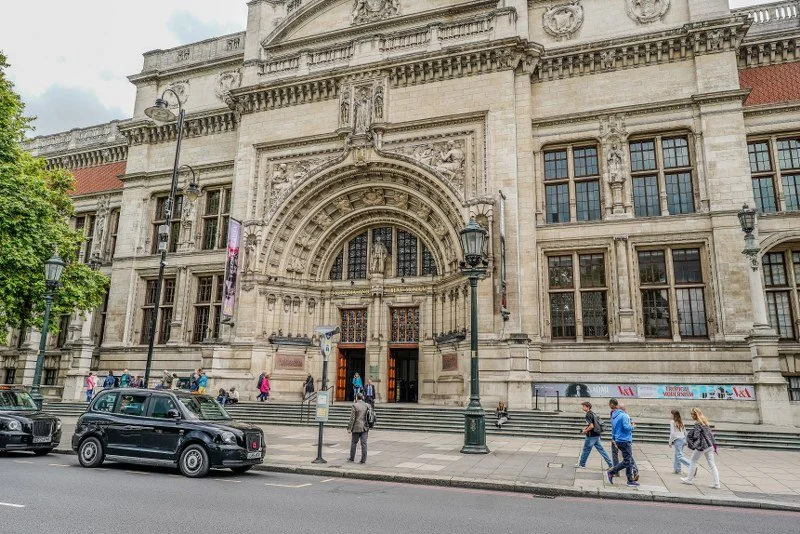
The other four are the British Museum, the National Gallery, the Natural History Museum, and the Science Museum. They are all free to visit, but for some of them you need to book free tickets.
The V&A is dedicated to decorative art and design and attracts a few million visitors each year.
Below, you will find 11 must-sees of the museum that can serve as a good starting point for exploring its vast collection.
The V&A offers free entry for everyone and usually doesn’t require advance booking. It also runs free guided tours, with schedules available at the information desk by the Cromwell Gardens entrance.
How much time do you need to visit the V&A Museum?
You can spend many hours at the museum, but I recommend dedicating at least 2h for a first visit.
Visiting London, Oxford or Cambridge?
See my free self-guided walks — used over 1 million times by people from around the world.
Things to see at the Victoria and Albert Museum
1. Stunning Architecture of the V&A Museum
I recommend entering the museum via the entrance on Cromwell Gardens so you can start your visit by seeing the majestic front elevation of the museum.
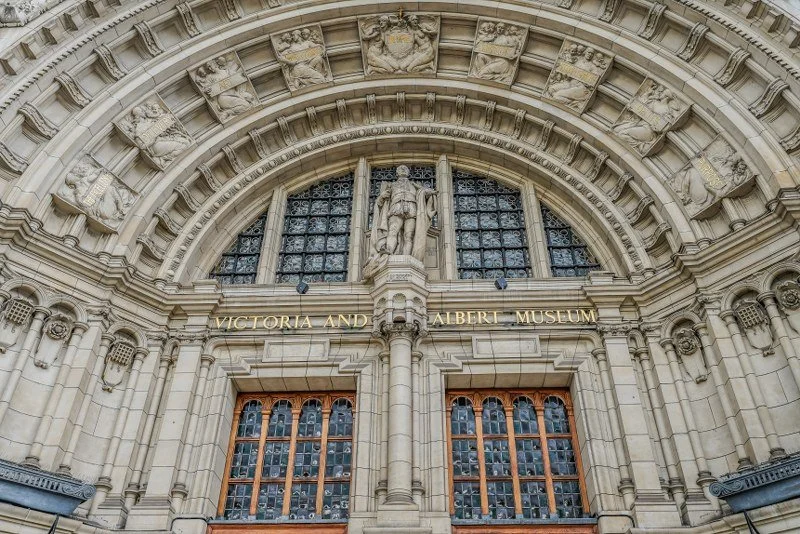
The building’s architecture is worth spending time to admire before you start exploring the various galleries inside.
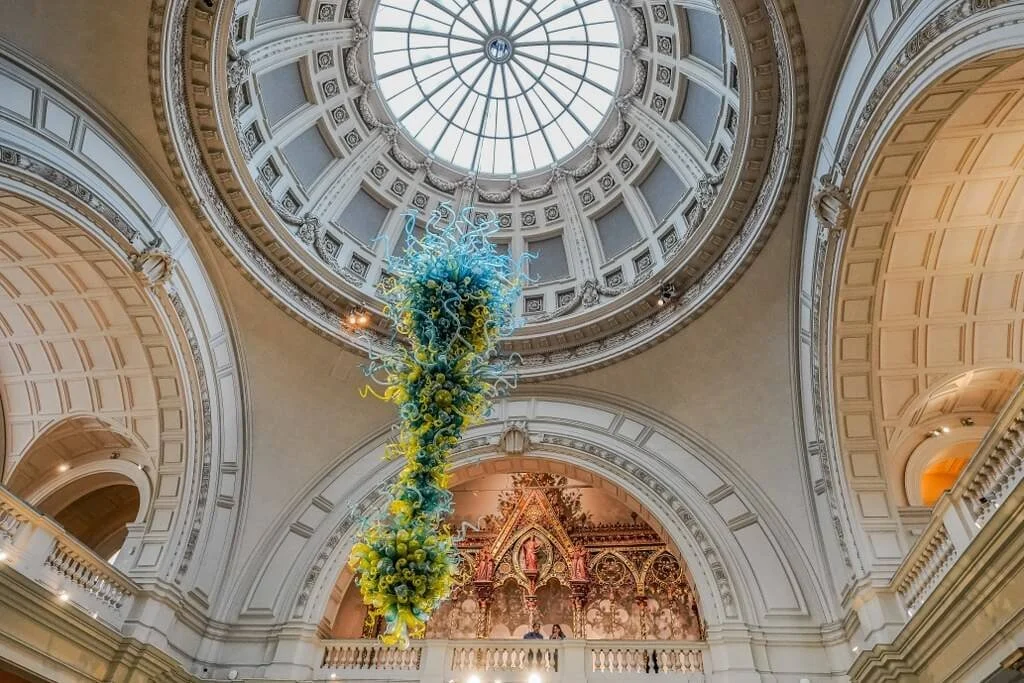
Make sure to visit the part of the museum located on level 0, called the John Madejski Garden.
Also, don’t miss the V&A Café — it might just be the coolest one in London! It’s located on Level 0, just behind the John Madejski Garden.

What & where to eat in London?
Discover 6 must-try British food experiences — from hidden gems to spots I personally take my tour guests to. Created by a London guide whose self-guided walks have been used over 1 million times worldwide. 👉 Get the insider guide here.
2. The Raphael Cartoons (level 0, room 48a)
The Raphael Cartoons are over 500 years old, large-scale designs created by the Italian artist Raphael and commissioned by Pope Leo X for the Sistine Chapel in Vatican City.
These designs were used as patterns for weavers in Brussels to create the tapestries that would adorn the chapel’s lower walls.
They are among the greatest treasures of the Renaissance in the UK.
They are displayed in a spacious and impressive gallery.
You can also preview them here.
3. The Altarpiece of St George (level 0, room 48a)
In the same gallery as Raphael Cartoons, you can also find the Altarpiece of St George—a collection of multiple panels over 600 years old, intricately carved from wood, and adorned with vibrant paint and gold leaf, depicting various episodes from the life of England’s patron saint, St. George.
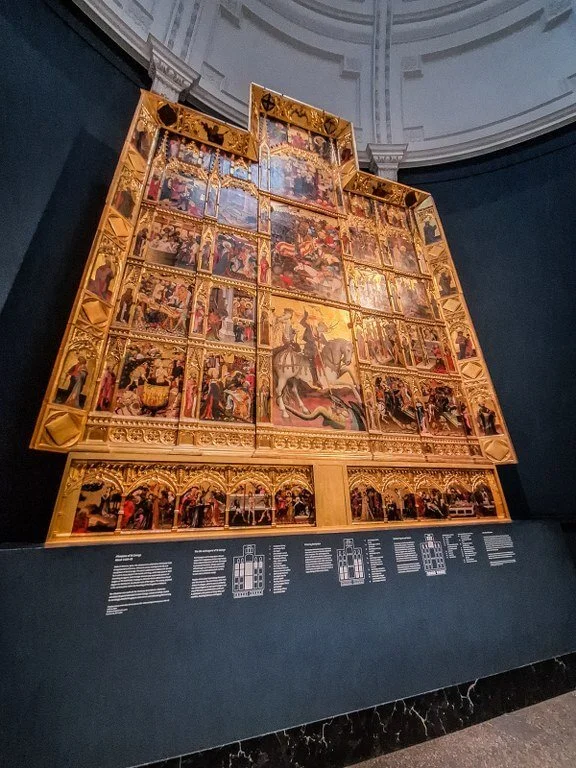
St. George was a Christian martyr and Roman soldier of Greek origin, known for his faith, courage, and the legendary tale of slaying a dragon, said to have occurred at the end of the 3rd century.
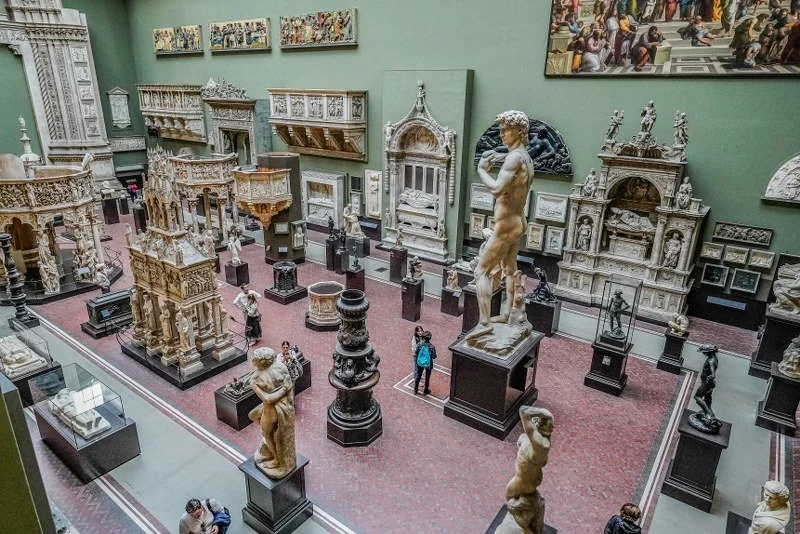
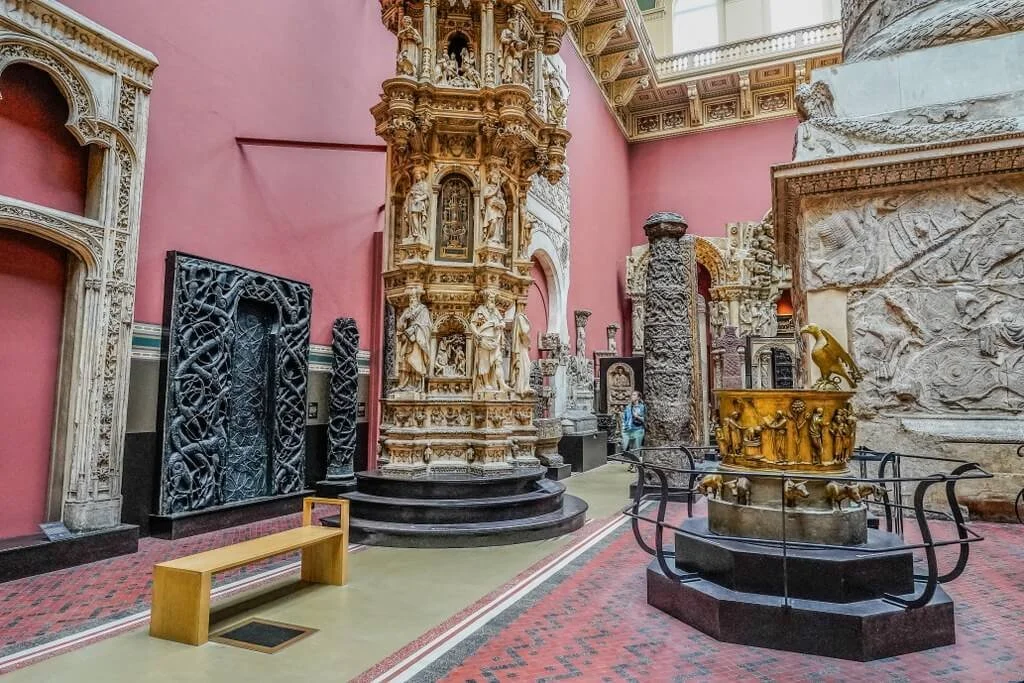
4. The Cast Courts (level 0, rooms 46, 46a, 46b)
The Cast Courts are high-ceilinged galleries that house replicas of iconic artworks from around the world.
For instance, you will find there a replica of Michelangelo’s David.
Established in the late 19th century, they were part of the museum’s mission to educate.
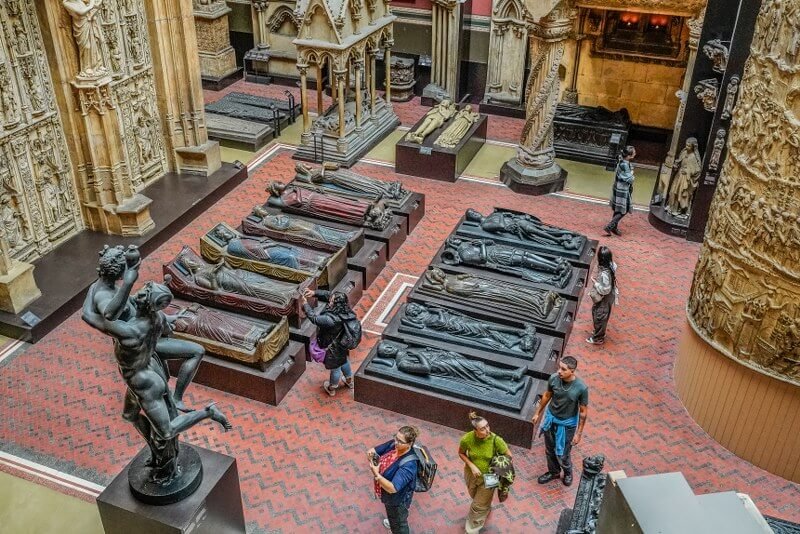
The Cast Courts allow visitors to study and compare casts of masterpieces that may be difficult or impossible to see in their original locations.
5. Fashion Gallery (level 0, room 40)
Step into the Fashion Gallery at the V&A and immerse yourself in a journey through style and elegance across centuries.
The gallery showcases a captivating array of garments, from sumptuous Victorian gowns to avant-garde designs of contemporary fashion icons.
6. Tippoo’s Tiger (level 0, room 41)
Tipu’s Tiger is a near-life-size wooden automaton depicting a tiger mauling a European soldier.
It was created in South India around the late 18th century during the reign of Tipu Sultan.
The automaton is operated by a crank mechanism and produces sounds to simulate the cries of the soldier and the growls of the tiger.
It symbolizes Tipu Sultan’s resistance against British colonialism in India.
7. The most famous bed in the world! (level 1, room 57)
The Great Bed of Ware (over 3 meters wide!) is a 16th-century treasure of the V&A Museum.
It is best known for being able to accommodate four couples at once and was even described by Shakespeare in Twelfth Night. Some people even say that he may have slept on it himself.
The bed was likely built for an inn in Ware, possibly as a tourist attraction.
Ware was a day’s journey from London by horseback back then, making it a convenient stop for a good night’s sleep!
8. The Jewellery collections! (level 2, rooms 91, 92, 93)
The V&A is home to one of the finest collections of jewelry in the world.
It features a diverse range of pieces, from ancient treasures to modern designs.
The section includes, among many other objects, notable pieces from Queen Victoria’s personal collection, such as her sapphire and diamond coronet and other jewels worn during her reign.
9. The oldest carpet in the world! (level 0, room 42)
In the Islamic Art Gallery, you can find the Ardabil Carpet – the world’s oldest carpet.
It originates from Iran and is almost 500 years old!
It’s also one of the largest, measuring approximately 10.5 meters by 5.3 meters.
With around 5,300 knots per ten square centimeters, it must have taken a team of skilled weavers several years to complete.
The carpet’s longevity and exquisite craftsmanship make it a must-see!
10. Stained Glass Gallery (level 2, rooms 83 and 84)
The Stained Glass Gallery at the V&A is a mesmerizing display of color and light, showcasing fine examples of this ancient art form.
The gallery features panels from various periods and styles, from the 12th to the 21st century.
11. Photography Gallery (level 2, rooms 100,101 and 108)
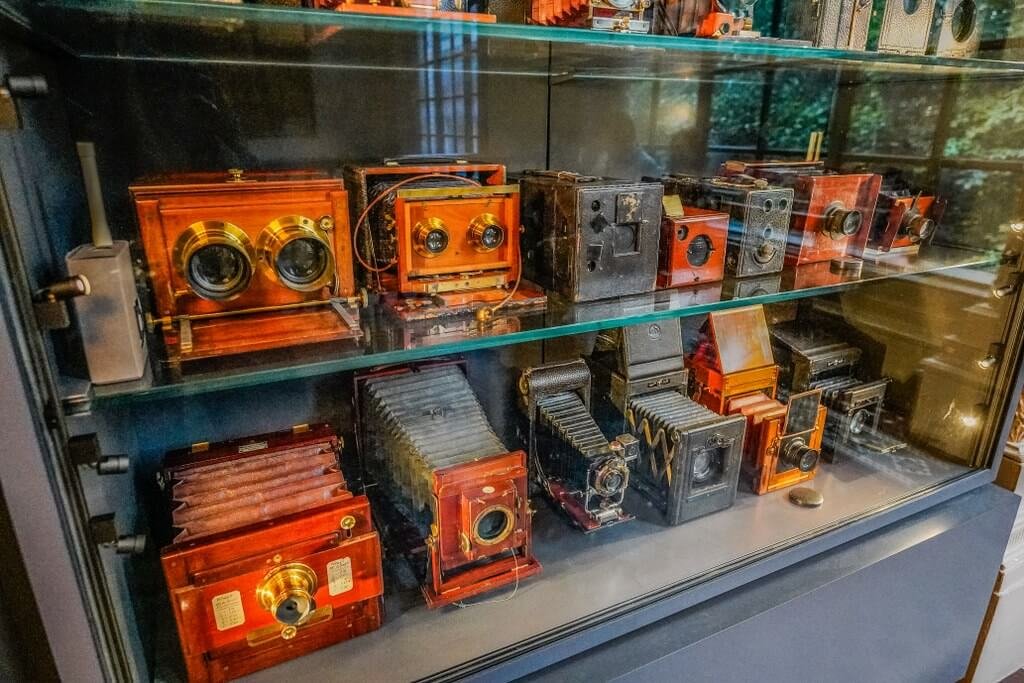
The Photography and Cameras Gallery at the V&A explores the evolution of visual storytelling through lenses and light.
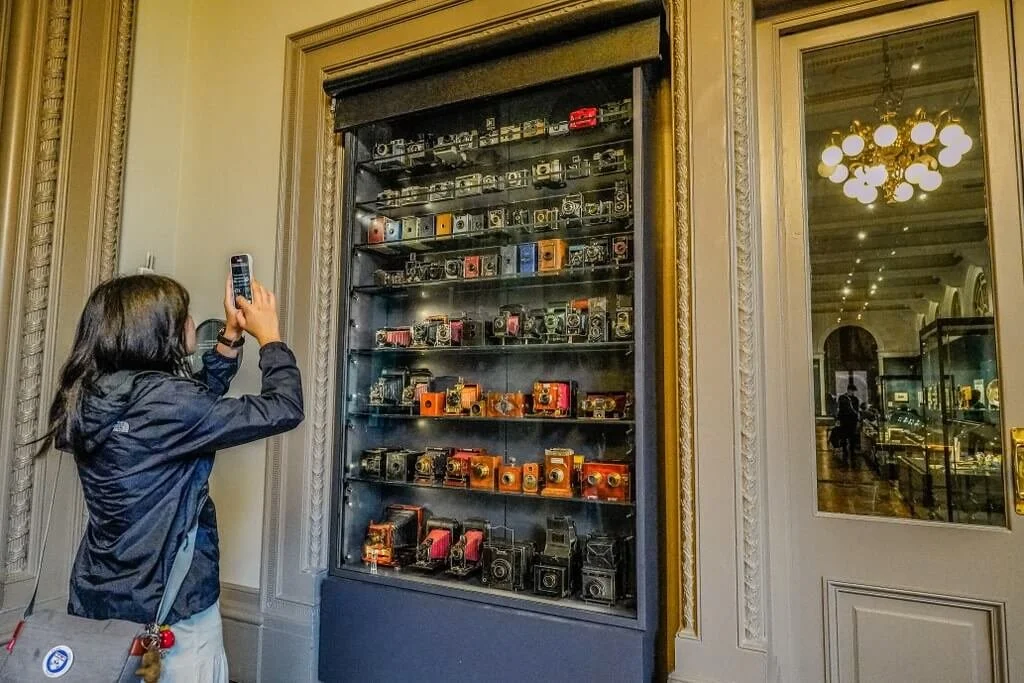
You can find there a vast collection of photographs and cameras, spanning from early models to modern digital innovations.
Of course, this is just a small taste of what the V&A has to offer — but I hope it’s enough to convince you that it’s absolutely worth a visit.
Visiting London, Oxford or Cambridge?
See my free self-guided walks — used over 1 million times by people from around the world.