
10 Reasons to Visit the Natural History Museum in London
Text & photography by Anna Kmiecik, private tour guide in London. Polish version of this guide is also available.
The Natural History Museum is one of the most fun museums to visit in London, especially if you are traveling with small children. And the best part? It’s free!
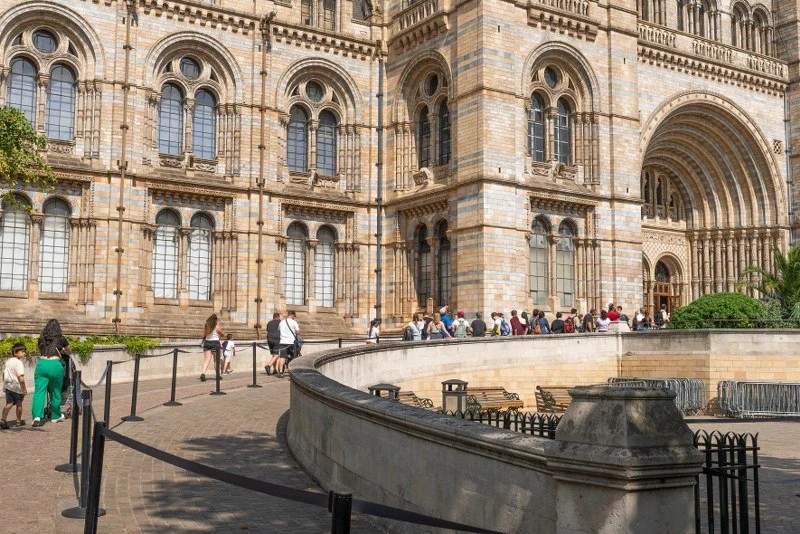
The museum houses approximately 80 million specimens spanning over 4 billion years, showcasing Earth’s natural history across disciplines such as botany, entomology, mineralogy, palaeontology, and zoology, including historical specimens collected by Charles Darwin!
Charles Darwin was naturalist who transformed the way we understand life on Earth by uncovering the theory of evolution through natural selection and one of the greatest British scientists who ever lived!
Below you will find 10 things not to miss during your visit.
Enjoy the read — and your time in museum that looks like Hogwarts!
Other popular free museums in London include:
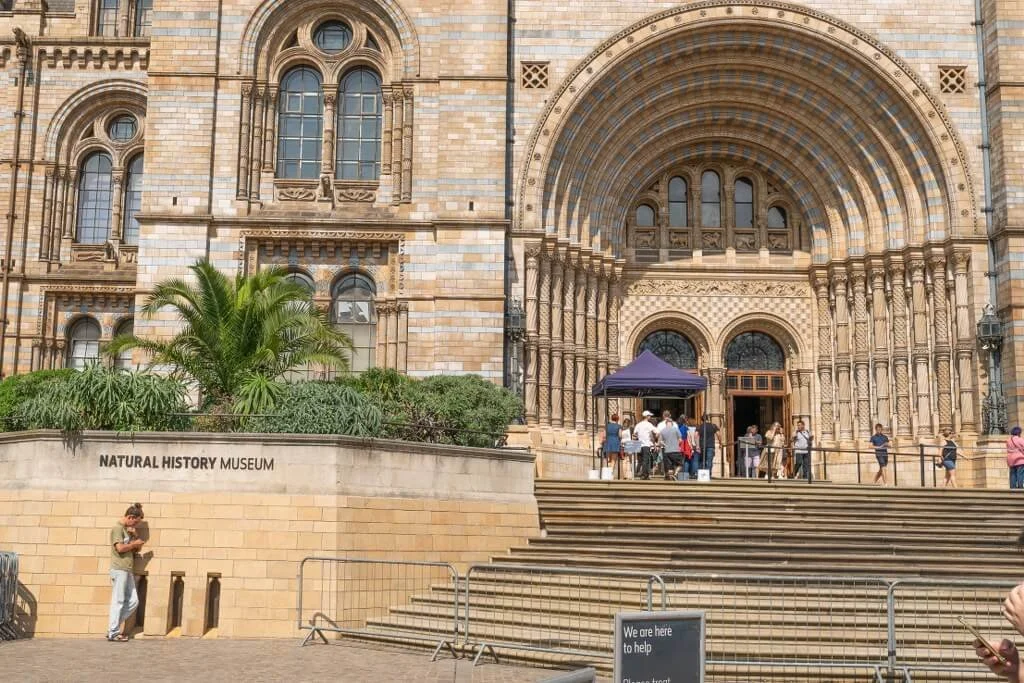
Before you visit the Natural History Museum, remember to book a free ticket. Although the museum accepts walk-ins on most days, it's better to book tickets on its website to avoid the queues and guarantee entry.
How much time do you need to visit the Natural History Museum?
You can spend many hours at the museum, but I recommend dedicating at least 2h for a first visit.
Visiting London, Oxford or Cambridge?
See my free self-guided walks — used over 1 million times by people from around the world.
Things to see at the Natural History Museum
1. Beautiful building of the museum
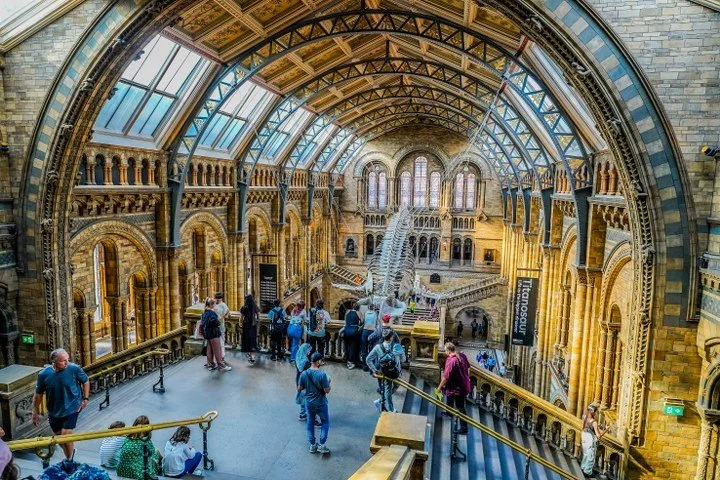
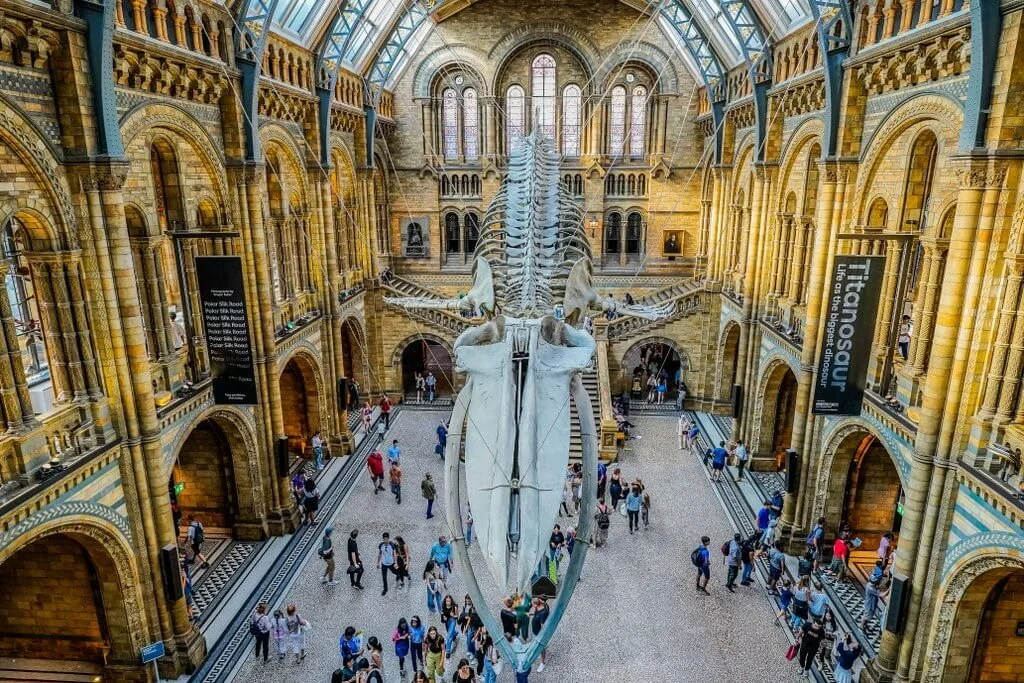
One of the main reasons to visit this museum is to see its building; both outside and inside area stunning.
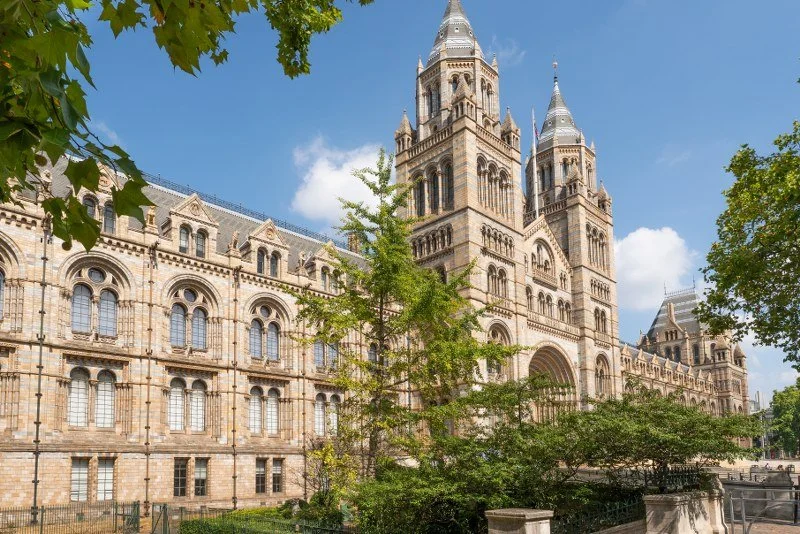
Although the origins of the museum stretch back to 1753, its current building first opened in 1881.
The so-called cathedral of nature has been featured in the first Paddington film!
2. 25.2-metre blue whale skeleton
The museum welcomes visitors with an impressive 25.2-meter-long skeleton of the largest animal that ever lived.
The skeleton of the blue whale is suspended above the heads of visitors who come to the museum every day in great numbers.
3. Dinosaurs section
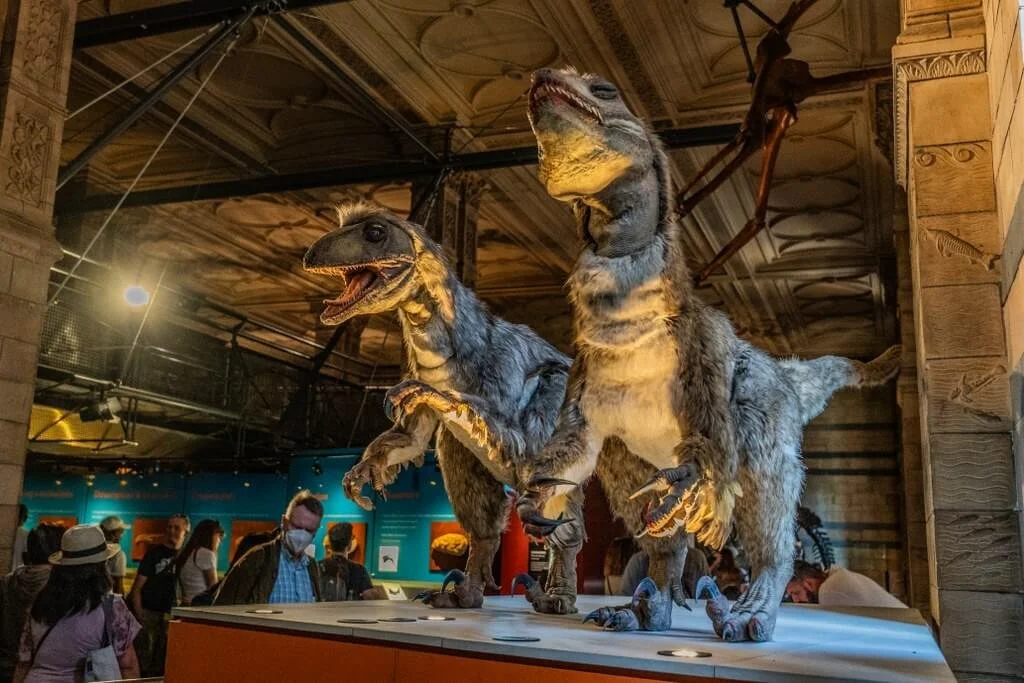
The dinosaur section at the Natural History Museum features an impressive array of fossil specimens that showcase the diversity and history of dinosaurs.
Visitors can explore life-sized models of iconic dinosaurs displayed in dynamic poses.
This section offers an educational and immersive experience for visitors of all ages!

What & where to eat in London?
Discover 6 must-try British food experiences — from hidden gems to spots I personally take my tour guests to. Created by a London guide whose self-guided walks have been used over 1 million times worldwide. 👉 Get the insider guide here.
4. Giant sequoia!
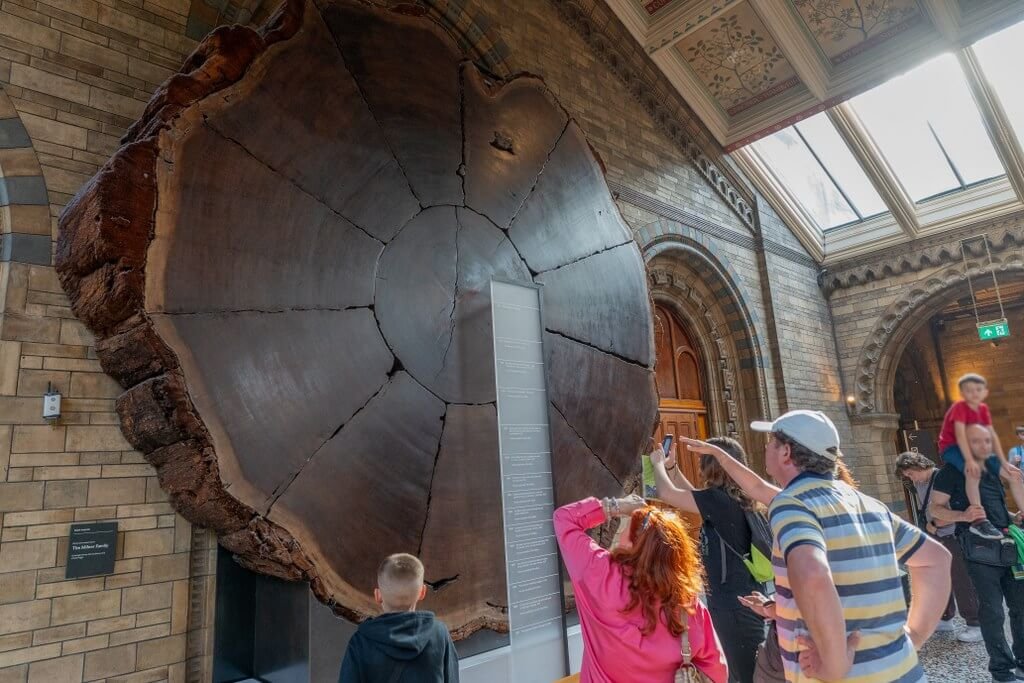
If you ascend the staircase to the upper levels of Hintze Hall, you’ll encounter a slice of a 1,300-year-old sequoia.
This majestic tree stood 101 meters tall when it fell and has been part of the museum’s collection since 1893.
5. Escalator into the heart of the Earth!
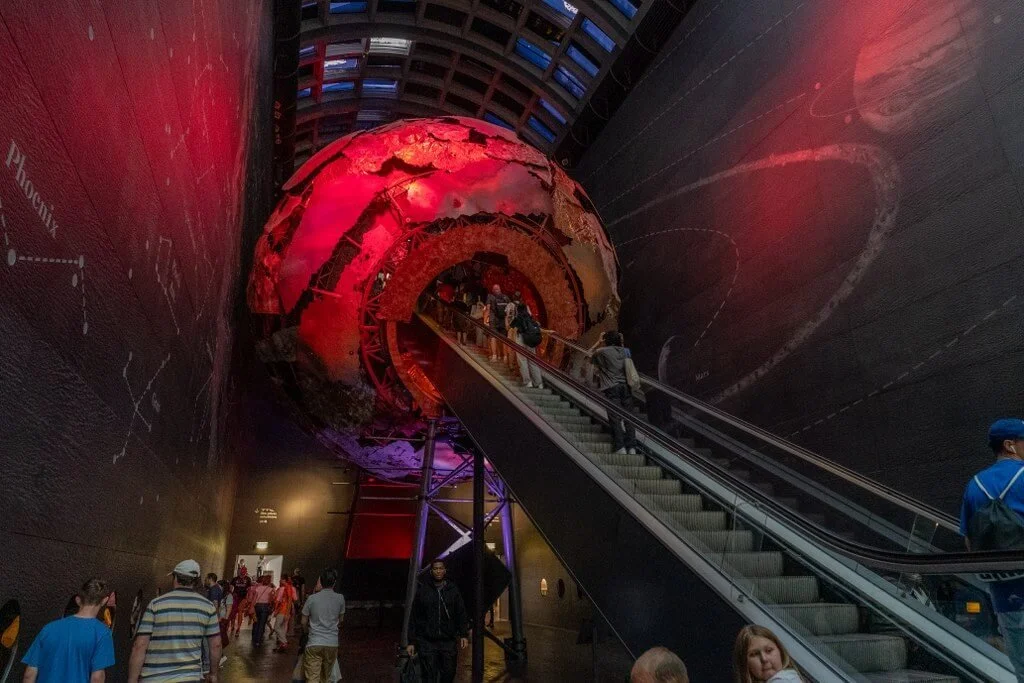
Inside the Natural History Museum, you can step onto a dramatic escalator that appears to take you straight into the heart of the Earth.
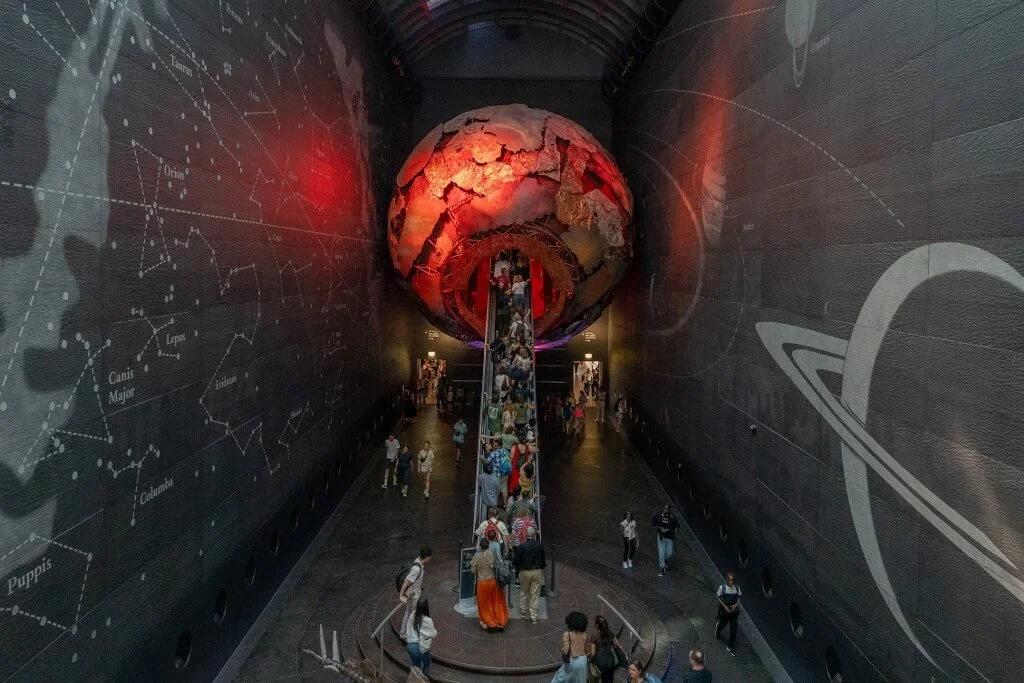
The glowing red walls making you feel as if you’re descending into a giant planet.
It’s not just a ride — it’s the beginning of a fascinating journey into volcanoes, earthquakes, and the powerful forces that shape our world!
6. Experience an earthquake!
The Volcanoes and Earthquakes sections of the museum include a simulator that allows you to experience an earthquake similar to the one in Kobe, Japan, in 1995.
7. Meet the Dodo - the bird that went extinct
The dodo was a flightless bird that became a symbol of extinction. Once native to Mauritius, it disappeared in the late 17th century, just a few decades after humans arrived on the island.
At the Natural History Museum, you can see life-sized models that bring this extraordinary bird back to life, reminding us just how fragile life on Earth can be.
8. Bird collections
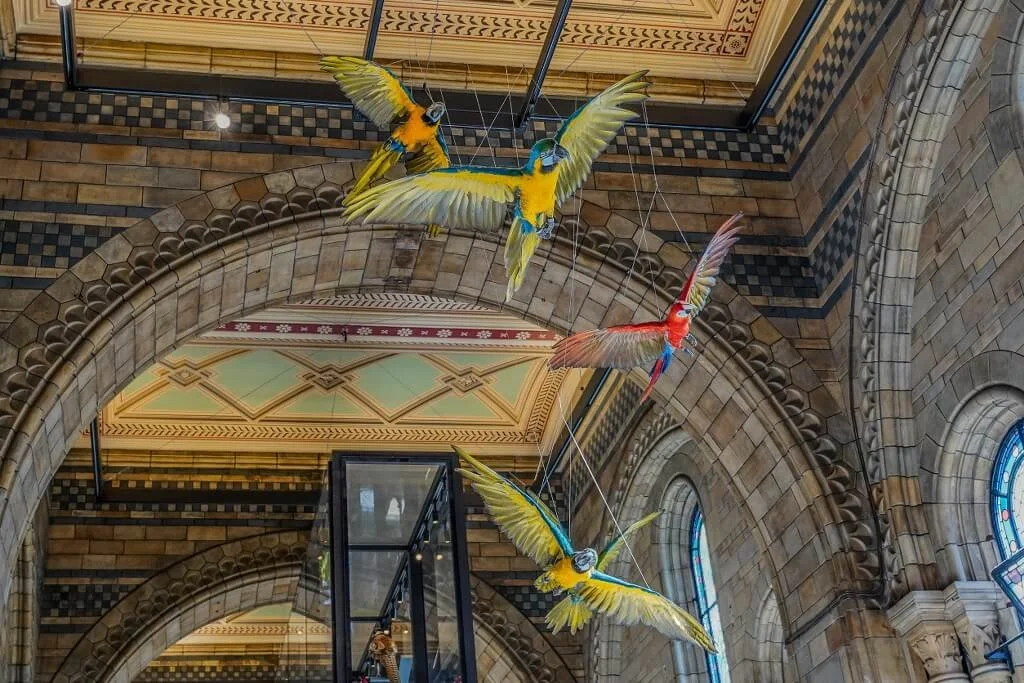
The bird collections at the Natural History Museum are amongst the most comprehensive in the world, and those on display are beautifully arranged!
9. Minerals gallery
The Natural History Museum’s geological collections encompass everything from seemingly ordinary grey rocks that reveal the origins of the Earth and solar system, to stunning gems with intriguing histories and famous collectors.
10. See 10,000-year-old Briton!
Cheddar Man is Britain’s oldest near-complete human skeleton, which was found in 1903 in Cheddar Gorge, Britain.
You can find it in the Human Evolution gallery.
Well, you’ve reached the end of this post! I hope you enjoyed it.
Of course, this is just a small taste of what the Natural History Museum has to offer — but I hope it’s enough to convince you that it’s absolutely worth a visit. :)
Visiting London, Oxford or Cambridge?
See my free self-guided walks — used over 1 million times by people from around the world.